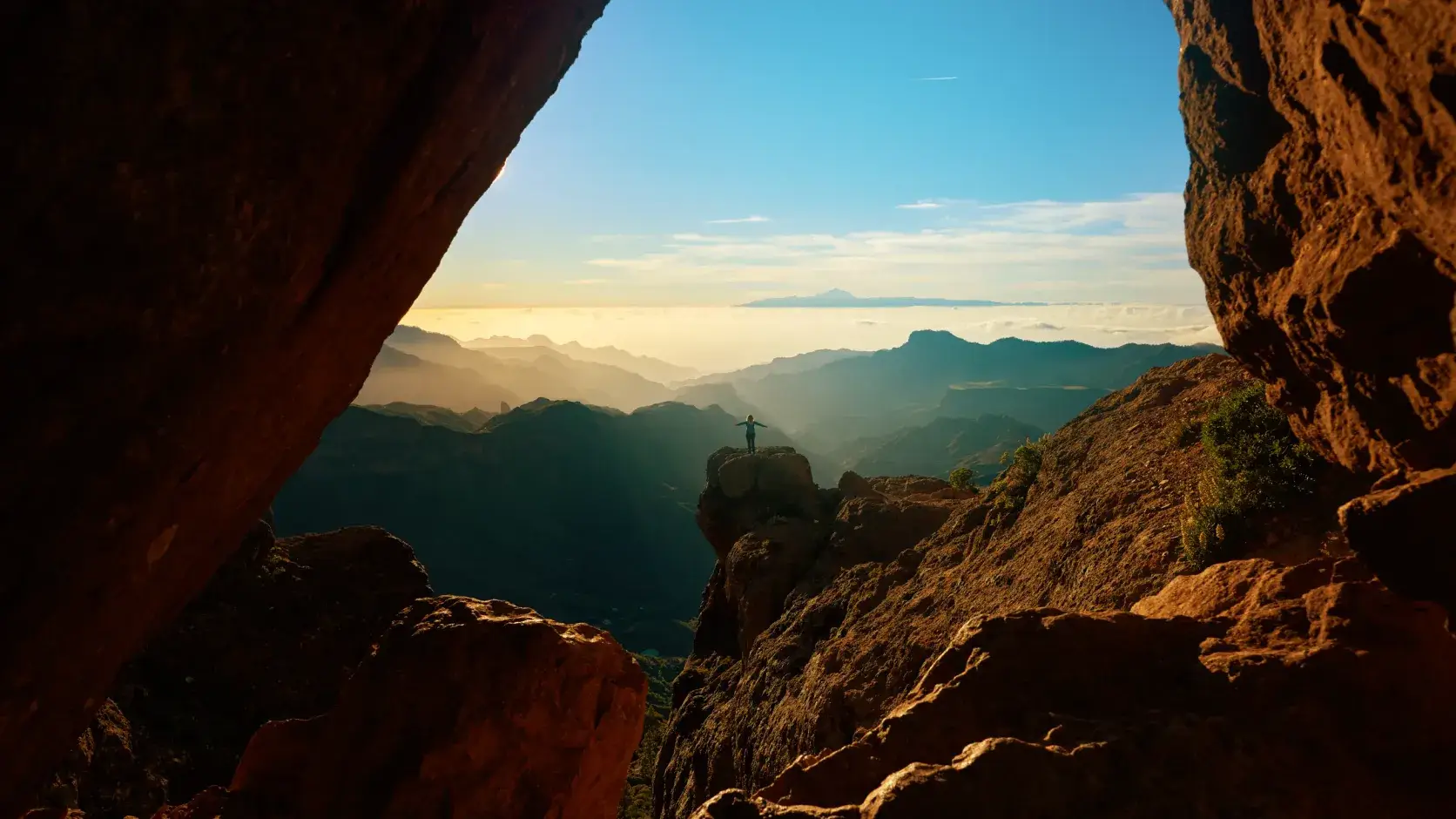
What to see in Gran Canaria in a week: a complete route around the island
Gran Canaria is known as the miniature continent, and a week is enough to see why. In just over 1,500 km², dunes by the sea sit alongside volcanic ravines, a capital with an urban beach, and mountain villages that feel like another era. With seven days ahead of you, there's plenty of time to take in the island unhurried, moving between coast, summit and city.
First days: the capital and the coast
It's worth starting in Las Palmas de Gran Canaria, with the historic quarter of Vegueta as your starting point and Playa de Las Canteras to round off the day. Its almost three kilometres of sand right in the city centre are protected by La Barra, a natural reef about 200 metres from the shore that calms the waves and makes it one of Spain's most distinctive urban beaches.
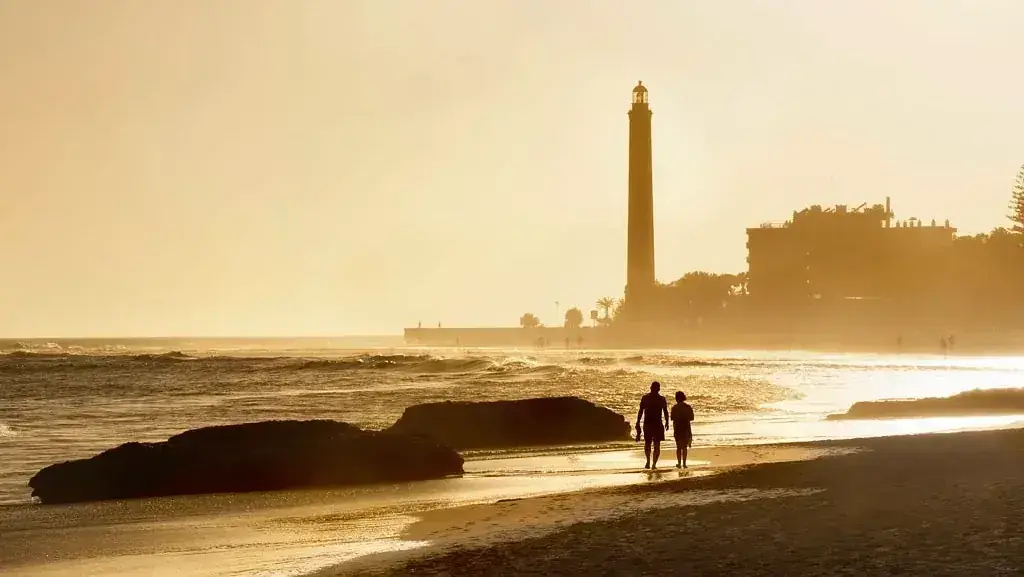
The next stretch heads south, to the Dunas de Maspalomas. This dune field, declared a Special Nature Reserve in 1987, is explored on foot from the Faro de Maspalomas, built in 1890 and now a visitor centre. Alongside the dunes lies the Charca, a wetland that shelters migratory birds and deserves a quiet moment, especially at sunset.
Middle days: the summit and Puerto de Mogán
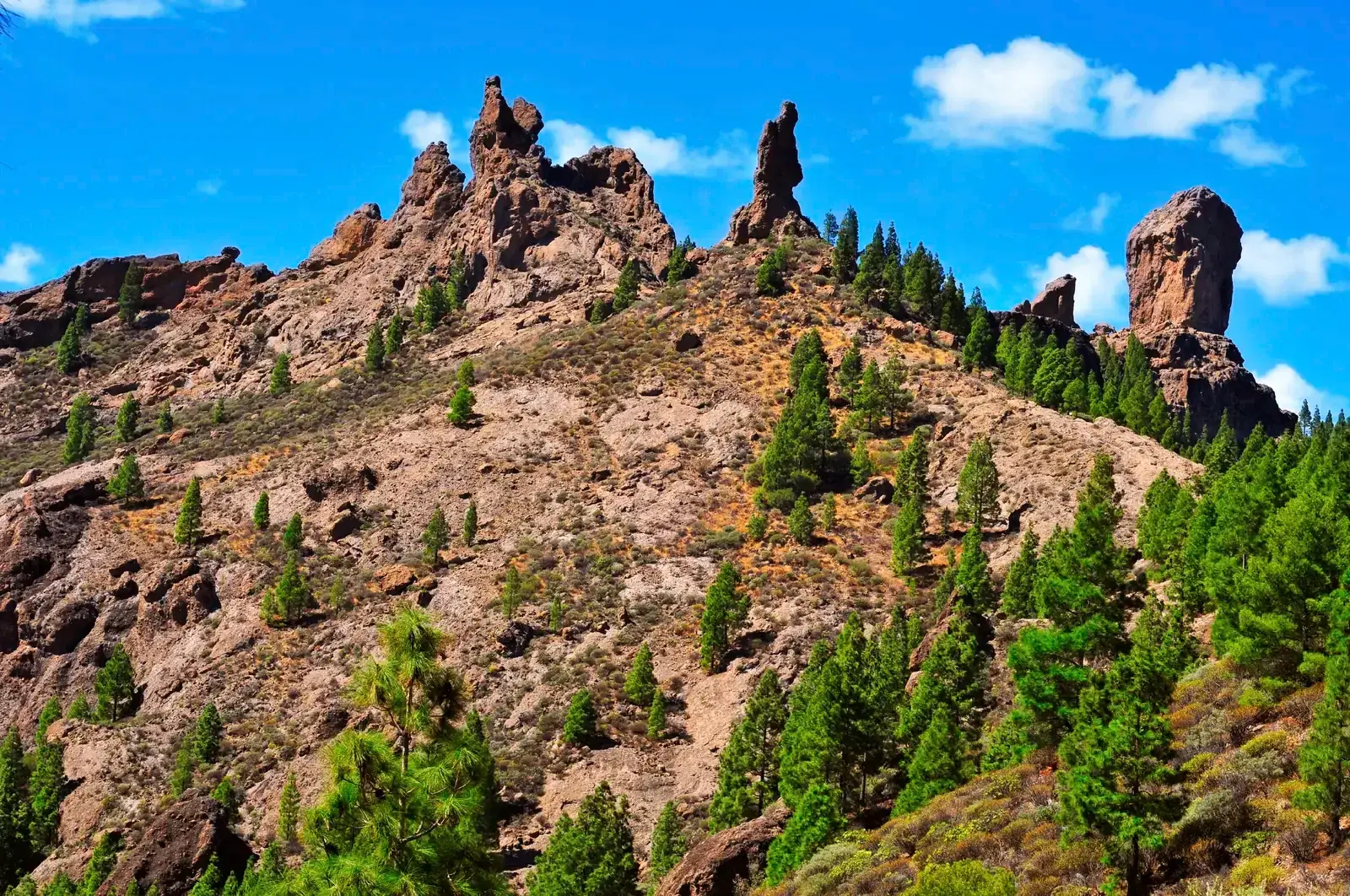
With the coast already covered, it's time to head inland. Roque Nublo, a volcanic monolith some 80 metres tall at over 1,800 metres above sea level, is the island's big hiking draw: the signposted trail starts from the La Goleta car park, on the GC-600 road, and it's barely 1.5 kilometres to its base, around 30 minutes through pine forest. The summit area is part of the UNESCO-declared Biosphere Reserve, so it's worth taking it slowly and enjoying the surroundings.
Heading back down to the south-west coast, it's Puerto de Mogán's turn, with its canals, bridges and whitewashed houses covered in bougainvillea. It's a good day to slow down: stroll among the boats in the marina, eat by the quayside and enjoy the seafaring atmosphere without needing to go far. If it falls on a Friday, the local market adds another plan to the day.
Final days: inland villages and flavours
The remaining days are perfect for venturing inland. Teror, with its carved wooden balconies and basilica dedicated to the Virgen del Pino, and Tejeda, ringed by viewpoints and famous for its almond pastries, are two essential stops. Anyone wanting to go further can head to the Barranco de Guayadeque, a deep volcanic ravine with cave dwellings and restaurants carved into the rock.
The trip can be rounded off with some local gastronomy: Flor de Guía cheese, with its Designation of Origin and set with wild thistle flower instead of animal rennet, sums up the island's character well. Seven days aren't enough to exhaust Gran Canaria, but they are enough to take away a complete picture of its many landscapes.
FAQs
Is a week enough to see Gran Canaria?+
Yes. Seven days give you time to combine the capital and Playa de Las Canteras, the Dunas de Maspalomas, the Roque Nublo route, Puerto de Mogán and inland villages like Teror or Tejeda, without rushing and with room to rest.
What should I see on the first day in Gran Canaria?+
The historic quarter of Vegueta, in Las Palmas de Gran Canaria, and Playa de Las Canteras are a good starting point: an almost three-kilometre urban beach protected by the natural reef of La Barra.
Is it worth climbing up to Roque Nublo?+
Yes. The trail to the base of the monolith starts from the La Goleta car park (GC-600 road) and is only 1.5 kilometres, around 30 minutes through pine forest. The area is part of the UNESCO-declared Biosphere Reserve.
Which inland villages are worth visiting?+
Teror, known for its wooden balconies and basilica, and Tejeda, ringed by viewpoints and famous for its almond sweets, are two of the most representative. The Barranco de Guayadeque adds a different landscape: inhabited caves and cave restaurants.
You may also like
South or north Gran Canaria: which area to choose for your getaway
 Guide
South or north Gran Canaria: which area to choose for your getaway
We compare the south and north of Gran Canaria on climate, beaches, atmosphere and nature, with Puerto de Mogán as an example of the best of the island's south-west.
Best things to do in Gran Canaria: nature, villages and island flavours
 Guide
Best things to do in Gran Canaria: nature, villages and island flavours
A selection of things to do in Gran Canaria: dunes, summit routes, charming villages like Puerto de Mogán and local cuisine to round off your stay.